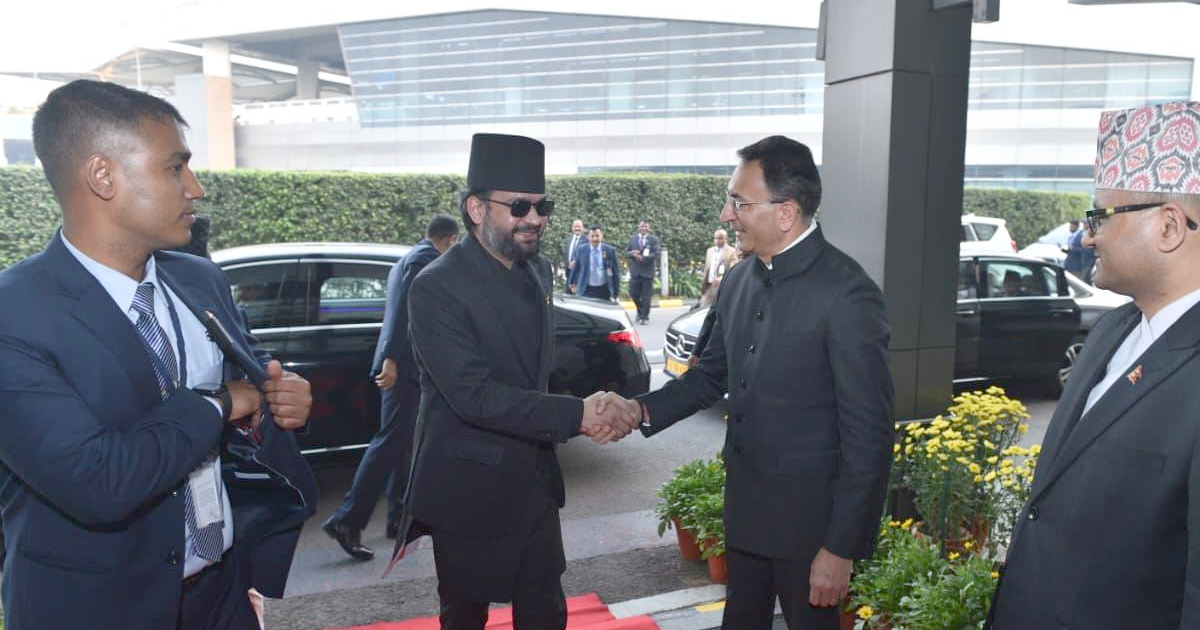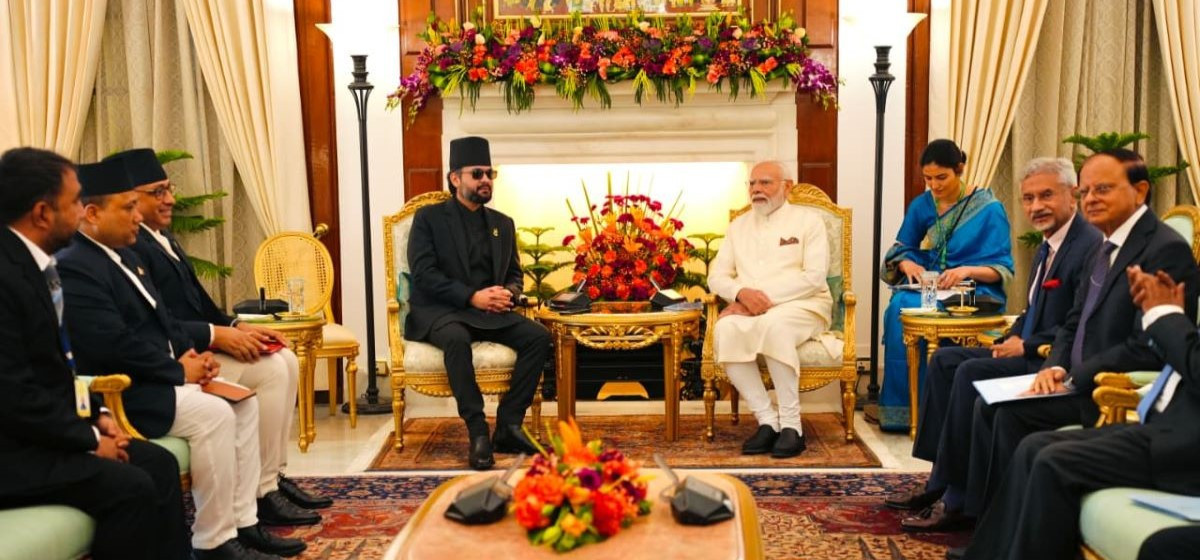
पोखरा / नेपाल र भारतबीच काठमाडौं–भैरहवा–लखनउ हवाई मार्गलाई दुवैतर्फ सञ्चालन गर्ने सहमति भएको छ। प्रधानमन्त्री बालेन्द्र शाहको भारत भ्रमणका क्रममा दुई देशबीच उक्त हवाई मार्गलाई दुवैतर्फ सञ्चालन गर्ने सहमति भएको हो।
भारतको राजकीय भ्रमणमा रहेका प्रधानमन्त्री शाह र भारतीय प्रधानमन्त्री नरेन्द्र मोदीबीच भएको वार्तापछि जारी संयुक्त वक्तव्यमा हवाई सम्पर्क विस्तार गर्ने सहमति भएको उल्लेख छ।
संयुक्त विज्ञप्तिको बुँदा नम्बर ८ मा भनिएको छ, ‘हाल एकतर्फी रहेको ‘बी३४५’ काठमाडौँ–भैरहवा–लखनउ हवाई मार्गलाई दुईतर्फी बनाउन दुवै पक्ष सहमत भएका छन्। यस सम्बन्धमा मोडालिटीलाई अन्तिम रूप दिन तथा हाल छलफलमा रहेका दुवै पक्षका अन्य नागरिक उड्डयनसम्बन्धी प्रस्तावहरूलाई सम्बोधन गर्न प्राविधिक परामर्श गरिनेछ।‘
हाल एकतर्फी रूपमा सञ्चालन हुँदै आएको बी–३४५ काठमाडौं–भैरहवा–लखनउ हवाई मार्गलाई अब दुवैतर्फ सञ्चालन गरिनेछ। यसका लागि आवश्यक प्रक्रिया टुंग्याउन दुवै पक्षबीच प्राविधिक छलफल हुने जनाइएको छ।
दुई देशबीच हवाई सम्पर्क विस्तार र आर्थिक गतिविधि बढाउने उद्देश्यले नागरिक उड्डयनसम्बन्धी अन्य प्रस्तावमा पनि छलफल भइरहेको संयुक्त वक्तव्यमा उल्लेख छ।
प्रधानमन्त्री शाहको भ्रमणका क्रममा भारतले नेपालको विकास तथा पूर्वाधार निर्माणका लागि २४ हजार करोड नेपाली रुपैयाँ बराबरको विकास सहायता उपलब्ध गराउने घोषणा गरेको छ। यसमध्ये ५ हजार ६०० करोड रुपैयाँ अनुदान र १८ हजार ४०० करोड रुपैयाँ ऊर्जा क्षेत्रका आयोजनाका लागि ऋण रहनेछ।
त्यस्तै, नेपालले गुजरातस्थित दीनदयाल बन्दरगाहमार्फत व्यापारिक पारवहन सुविधा पाउने भएको छ। आवश्यक पूर्वाधार तयार भएपछि ओडिसास्थित पारादीप बन्दरगाहको पहुँचसमेत उपलब्ध गराइने भारतले जनाएको छ।
भ्रमणका क्रममा अयोध्या र जनकपुरबीच ‘सरयू–कमला एक्सप्रेस’ रेल सेवा उद्घाटन गरिएको छ। रक्सौल–काठमाडौं विद्युतीय ब्रोडगेज रेलमार्गको फिल्ड लोकेसन सर्वेक्षण सम्पन्न भएको घोषणा गरिएको छ भने नेपालमा पूर्व–पश्चिम रेलमार्ग विकासमा सहकार्य गर्ने सहमति भएको छ।
ऊर्जा क्षेत्रमा ६६९ मेगावाट क्षमताको तल्लो अरुण जलविद्युत् आयोजनाको शिलान्यास गरिएको छ। त्यस्तै, चितवनमा कृषि औद्योगिक पार्क स्थापना गर्न भारतले अनुदान दिने र नेपालमा भारतीय प्रविधि संस्थान (आईआईटी) को शाखा क्याम्पस स्थापना गर्ने सहमति भएको छ।
भ्रमणका क्रममा दुई देशबीच फरेन्सिक विज्ञान, प्रहरी तालिम, निजामती कर्मचारीको क्षमता विकास, आयुर्वेद तथा परम्परागत चिकित्सा, भू–उपग्रह सञ्चार, दिगो सहरी विकास, स्वास्थ्य तथा औषधि र पशुपन्छी तथा मत्स्य विकाससम्बन्धी आठवटा समझदारीपत्र आदानप्रदान भएका छन्।
प्रधानमन्त्री शाहले भारतीय प्रधानमन्त्री मोदीलाई नेपाल भ्रमणको निमन्त्रणा दिएका छन्। मोदीले निमन्त्रणा स्वीकार गरे पनि भ्रमणको मिति कूटनीतिक माध्यमबाट तय गरिने संयुक्त वक्तव्यमा उल्लेख छ।
प्रधानमन्त्री बालेन्द्र शाह र भारतीय समकक्षी नरेन्द्र मोदीबीच भएको सहमति पछि जारी संयुक्त प्रेस विज्ञप्ति:
Joint Press Release on the State Visit of the Prime Minister of Nepal to India (22-23 November 2026)
At the invitation of the Prime Minister of India, Shri Narendra Modi, H.E. Mr. Balendra Shah, Prime Minister of Nepal, undertook a State Visit to India from 22-23 November 2026. He was accompanied by a high-level official delegation. This visit was Prime Minister Balendra Shah’s first visit to India after his assumption of office.
2. Prime Minister Shah was accorded a ceremonial welcome at Rashtrapati Bhavan. He paid homage to Mahatma Gandhi at Rajghat. Prime Minister Shah called on Hon’ble President of India, Smt. Droupadi Murmu. External Affairs Minister, Dr. S. Jaishankar also called on Prime Minister Shah.
3. Prime Minister Modi held talks with Prime Minister Shah and hosted a luncheon in his honour. The discussions between the two leaders covered key areas of bilateral cooperation and regional issues of mutual interest as well as global developments.
4. Prime Minister Shah acknowledged with appreciation India’s humanitarian and technical support and solidarity in the aftermath of the devastating Rasuwa-Bhotekoshi floods that caused significant loss of life and destruction of property in Nepal.
5. Prime Minister Modi reaffirmed India’s unwavering support to Nepal’s development journey as a close friend and neighbour. India will extend development assistance of INR 15,000 crores (NPR 24,000 crores) comprising a grant assistance of INR 3,500 crores (NPR 5,600 crores) for post-disaster reconstruction and new infrastructure projects in Nepal; and a Rupee-denominated Line of Credit of INR 11,500 crores (NPR 18,400 crores) for energy sector projects. Specific projects as well as modalities for the provision of development assistance will be finalized through mutual consultations.
6. Both leaders noted with satisfaction the ongoing progress in the implementation of development projects in Nepal, including the High Impact Community Development Projects (HICDP). They noted the progress achieved in the construction of the National Police Academy in Nepal, being built with assistance from Government of India. Both leaders also welcomed the announcement of setting up an Agro-Industrial Park in Chitwan with grant assistance from India.
7. The two leaders adopted a Joint Vision for a “Viksit Bharat and Samunnat Nepal”. The Joint Vision statement provides the roadmap for an aspirational and future-oriented partnership between India and Nepal. It encompasses initiatives to augment traditionally strong areas of bilateral cooperation such as economic and development partnership, connectivity, energy and water resources, and people-to-people linkages, as well as new synergies in the domains of climate resilience, disaster mitigation and management, sports, start-ups, digital services, space and innovation.
8. The leaders noted the on-going discussions on civil aviation matters, aimed at enhancing connectivity and boosting bilateral economic engagement. Both sides agreed that the existing unidirectional B345 Kathmandu-Bhairahawa-Lucknow route, will be made bidirectional. Technical consultations will be held to finalize the modalities in this regard and to address other civil aviation proposals from both sides currently under discussion.
9. Prime Minister Modi announced a new connectivity avenue for Nepal’s transit trade through Deendayal Port (Kandla, Gujarat). Further, access to Paradip port (Odisha) will also be made available once requisite infrastructure is in place.
10. The two leaders underlined the importance of improving cross-border connectivity and enhancing border infrastructure, through the establishment of new railway lines, bridges, Integrated Check Posts (ICPs) and petroleum pipelines.
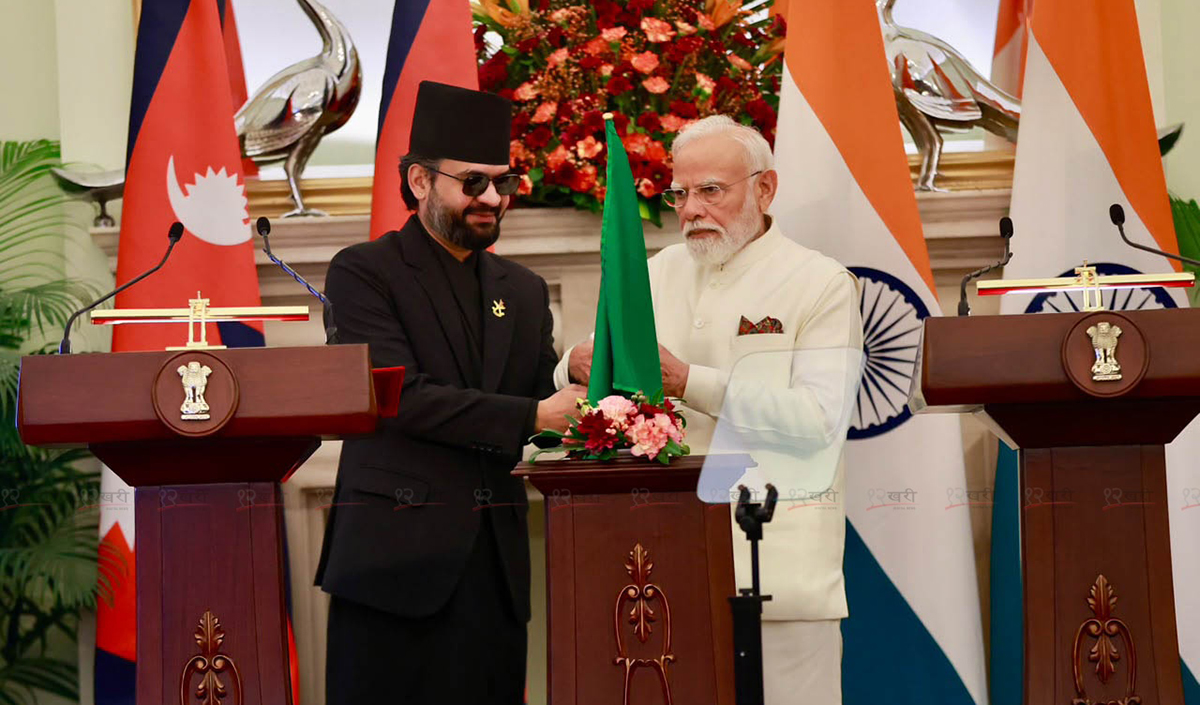
11. The two Prime Ministers flagged off the inaugural Sarayu-Kamala Express rail service between Ayodhya and Janakpur. This rail service will not only improve connectivity but also give a fillip to religious and cultural tourism along the Ramayana Circuit, and strengthen the civilisational ties between India and Nepal. The leaders agreed to explore similar connections to develop Buddhist and Shiv-Shakti religious tourism circuits.
12. The two leaders announced the finalization of the Field Location Survey for the proposed Raxaul–Kathmandu electrified broad-gauge railway line, and announced that the two sides will collaborate in the development of the East-West Railway in Nepal.
13. The two leaders laid virtually the foundation stone for a new ICP at Banbasa and welcomed the progress in the construction of the ICPs at Bhairahawa, Sunauli and Dodhara-Chandani. Three ICPs between India and Nepal are already operational.
14. A new cross-bordermotorable bridge between Dharchula (India) and Darchula (Nepal) was inaugurated by the leaders. This will help improve direct connectivity between Western Nepal and India.
15. The leaders noted with satisfaction the progress in joint field work relating to maintenance and repair of boundary pillars, and directed the Foreign Secretaries to work on the outstanding boundary issues.
16. In an expansion of cross-border petroleum infrastructure between India and Nepal, the leaders dedicated to the people of Nepal phase II of the Motihari-Amlekhgunj Pipeline. The two leaders also laid virtually the foundation stone for the development of a petroleum terminal at Jhapa, Nepal and emphasized the importance of early commencement of work on the petroleum pipeline between Siliguri and Jhapa. Both sides agreed to explore cooperation in the construction of gas pipelines between India and Nepal.
17. Both sides expressed satisfaction at the bilateral progress in the hydropower sector, in keeping with the India-Nepal Joint Vision Document for Power Sector Cooperation and the Long Term Power Trade Agreement. Both sides welcomed the active engagement of Indian companies in the hydro-power sector in Nepal, and agreed to ensure the expeditious completion of various hydropower projects being developed by Indian companies in Nepal. On this occasion, the two leaders laid virtually the foundation stone for the 669 MW Lower Arun Hydro-Electric Project.
18. The two leaders directed the Pancheshwar Development Authority and the Joint Committee on Water Resources to finalise the Detailed Project Report of the Pancheshwar Multipurpose Project expeditiously and commence work on the implementation of the project. Both leaders also agreed on the need to accelerate work on the DPR of the Saptakoshi and Sunkoshi multipurpose projects to harness water resources for mutual benefit and mitigate the impact of floods.
19. The two sides noted with satisfaction the progress regarding the formation of JVs for two high-capacity cross-border transmission lines between Inaruwa (Nepal) – New Purnea (India) and Dododhara (Nepal) – Bareilly (India).
20. In an expansion of India’s development and capacity-building support to Nepal, the two leaders agreed that India would set up an off-shore IIT campus in Nepal. This will serve as a force-multiplier in Nepal’s education sector and also promote job creation. Both leaders welcomed the expanding co-operation between India and Nepal in the area of technology, including start-ups and digital and financial connectivity.
21. Both sides acknowledged the need to mutually facilitate smoother access to services, including banking and telecom, for the people of one country residing in the other.
22. The following Memoranda of Understanding were exchanged between the two sides during the visit:
- Memorandum of Understanding (MoU) for Academic and Research Collaboration between National Forensic Sciences University, Gandhinagar, Gujarat, India, and Crime Investigation Department, Nepal Police.
MoU between Rashtriya Raksha University (RRU), India, and National Police Academy (NPA), Nepal.
- MoU between National Centre for Good Governance, Department of Administrative Reforms & Public Grievances, Government of India, and Nepal Administrative Staff College, Ministry of Federal Affairs and General Administration, Government of Nepal, on Capacity Building Training Programme for Civil Servants of Nepal.
- MoU between Government of India and Government of Nepal on Cooperation in the field of Ayurveda and other Traditional Systems of Medicine.
- MoU between Indian Space Research Organisation (ISRO), Government of India, and Ministry of Information and Communication (MOIC), Government of Nepal, on Establishment of Satellite Communication (SATCOM) Network for the Utilization of South Asia Satellite.
- MoU between Government of India and Government of Nepal on Technical Cooperation in the field of Sustainable Urban Development.
- MoU between Ministry of Health and Family Welfare, Government of India, and Ministry of Health and Food Safety, Government of Nepal, on Cooperation in the field of Health and Medicine.
- MoU between Government of India and Government of Nepal on Cooperation in the field of Livestock and Fisheries Development.
23. The Prime Minister of Nepal expressed his gratitude to the Prime Minister of India for the warm hospitality accorded to him and his delegation; and formally invited him to visit Nepal. The Indian Prime Minister accepted the invitation, with the official dates for the visit to be confirmed through diplomatic channels.
24. The India-Nepal partnership is built on deep trust, friendship, mutual respect and understanding across all levels, and is further strengthened by strong people-to-people connections as well as close economic and developmental cooperation. The visit reaffirmed the tradition of regular high-level exchanges between the two countries and the commitment of the two sides to advance it further.
23 November 2026
New Delhi